

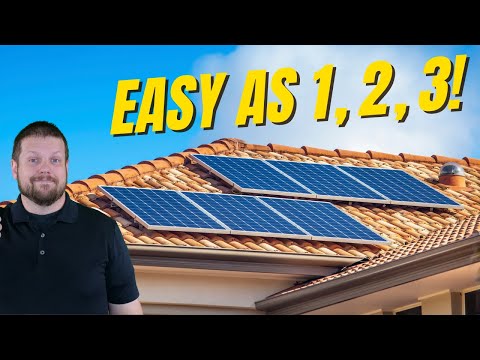



Title: Determining the Optimal Number of Solar Panels to Power a House: A Comprehensive Research Analysis
Introduction:
Undoubtedly, the pursuit of sustainable and renewable energy sources has gained significant momentum in recent years. As the adverse environmental impacts of traditional power generation become increasingly apparent, solar energy has emerged as a leading solution to power our homes and reduce carbon footprints. However, one essential question lingers: How many solar panels does it truly take to effectively power a house?
In this research-driven article, we delve into a comprehensive analysis of the factors influencing the optimal number of solar panels required to meet the energy demands of a typical household. By examining key variables such as geographical location, energy consumption patterns, and solar panel efficiency, we aim to provide a factual understanding of the considerations involved in determining the required number of solar panels.
While the concept of harnessing sunlight for electricity isn’t new, advancements in solar panel technology and the decreasing cost of installation have made solar power an attractive prospect for homeowners across the globe. Nevertheless, to accurately determine the number of solar panels needed, it’s crucial to move beyond general estimations and delve into the intricacies of each specific scenario.
Through extensive research, we intend to shed light on this pressing question and equip homeowners, prospective solar panel users, and renewable energy enthusiasts with a comprehensive understanding of the requirements tailored for their individual needs. By scrutinizing available data, examining case studies, and analyzing statistical models, we aim to cut through the fog of preconceived notions and provide an evidence-based assessment of this crucial aspect of solar power integration.
From the inherent variability of solar irradiation to the efficiency of panels, there exists a multitude of interdependent factors that ultimately determine the number of solar panels required to power a house. By presenting factual information derived from rigorous analysis, this article aims to empower readers with the knowledge necessary to make informed decisions, maximize energy efficiency, and contribute actively to sustainable practices.
Stay tuned as we navigate this research-oriented exploration, breaking down each significant factor and providing a comprehensive answer to the question: How many solar panels are needed to effectively power a house?
Table of Contents
- Determining the Required Number of Solar Panels for Household Electricity Generation
- Evaluating Energy Consumption and Calculating the Optimal Solar Panel Capacity
- Q&A
- Key Takeaways
Determining the Required Number of Solar Panels for Household Electricity Generation
When it comes to harnessing the power of the sun, one question that often arises is: how many solar panels are needed to power a house? The answer depends on various factors, including the energy consumption of the household and the efficiency of the solar panels installed. By understanding the key considerations and calculations involved, you can determine the optimal number of solar panels required for your specific electricity generation needs.
First and foremost, it is important to assess your household’s energy consumption. By analyzing your past electricity bills or using energy monitoring devices, you can gain valuable insights into your average daily and monthly usage. This information will serve as the basis for calculating the number of solar panels you need. Keep in mind that the higher your energy consumption, the more solar panels you will require to meet your electricity needs. Additionally, consider the geographical location of your house and the amount of sunlight it receives throughout the year. Sunnier regions may require fewer solar panels, while areas with less sunlight will need more panels to compensate for the reduced solar energy availability.
- Calculate your average daily and monthly energy consumption by referring to past electricity bills or using energy monitoring devices.
- Assess the geographical location of your house and consider the amount of sunlight it receives throughout the year.
- Take into account the efficiency and output rating of the solar panels you plan to install.
- Consider your energy consumption goals, whether you aim for partial or full power independence.
- Consult with solar energy professionals to ensure an accurate assessment and receive personalized guidance.
Remember, determining the number of solar panels needed to power your house is a crucial step in designing an effective and efficient solar energy system. By taking into account your household’s energy needs, location, and other relevant factors, you can harness the sun’s abundant energy and enjoy the benefits of sustainable, clean power for years to come.
Evaluating Energy Consumption and Calculating the Optimal Solar Panel Capacity
To determine how many solar panels are needed to power a house, it is essential to first evaluate the energy consumption of the household and calculate the optimal solar panel capacity. This evaluation involves understanding the energy requirements of various appliances and systems within the home, as well as considering factors such as geographic location, available sunlight, and desired level of energy independence. By conducting a thorough analysis, homeowners can make informed decisions regarding the number of solar panels needed to meet their energy needs while minimizing costs and maximizing efficiency.
-
Evaluate energy consumption: Begin by assessing the energy consumption of different appliances and systems in the house. Consider factors such as lighting, heating and cooling systems, water heaters, refrigeration, electronics, and other high-energy appliances. Consult utility bills, energy monitoring devices, or engage the services of an energy auditor to obtain accurate data on energy usage.
-
Calculate optimal solar panel capacity: Once energy consumption has been determined, it is important to calculate the optimal solar panel capacity. Considerations include the average daily sunshine hours in the area, seasonal variations, and the desired level of energy independence. It is advisable to consult a solar panel professional or utilize online solar panel calculators to determine the required panel capacity. These calculations take into account the efficiency and capacity of the solar panels, as well as the available roof space for installation.
Remember that solar panel capacity can also be influenced by factors such as shading from nearby buildings or trees, the angle and orientation of the roof, and local regulations. By carefully , homeowners can confidently invest in a solar energy system that provides clean and sustainable power for their households while reducing reliance on conventional energy sources.
Q&A
Q: How many solar panels are needed to power a typical house?
A: The number of solar panels required to power a house depends on various factors such as energy consumption, location, available roof space, and the efficiency of the panels themselves.
Q: What is the average energy consumption of a typical house?
A: The average energy consumption of a typical house varies significantly depending on the size of the property, the number of occupants, and their energy usage habits. However, in the United States, the average residential electricity consumption is around 10,649 kilowatt-hours (kWh) per household annually.
Q: How can I determine my household’s energy consumption?
A: To determine your household’s energy consumption, you can review your electricity bills to find the monthly or annual usage in kilowatt-hours. Alternatively, you can use energy monitoring devices that measure electrical consumption in real-time, providing insights into your energy needs.
Q: How do I calculate the number of solar panels required based on energy consumption?
A: To calculate the number of solar panels needed to power your house, you need to know the average daily energy consumption. Divide your daily energy consumption by the average daily output of a solar panel. This figure varies depending on the panel’s wattage, efficiency, and sunlight availability.
Q: How much energy can a typical solar panel produce?
A: The amount of energy a solar panel produces depends on its wattage and efficiency, as well as the intensity and duration of sunlight it receives. On average, a standard solar panel with a wattage of around 300-350 watts can produce approximately 0.8-1.2 kilowatt-hours (kWh) per day.
Q: What is the typical wattage of a solar panel?
A: Solar panels generally range in wattage from 250 to 400 watts, with most residential panels falling between 300 and 350 watts.
Q: Can location affect the number of solar panels required?
A: Yes, location plays a crucial role in determining the number of solar panels needed. Areas with more sunlight throughout the year will require fewer panels compared to regions with lower solar irradiation. It is essential to consider the local climate and optimal orientation and tilt angle for the solar panels to maximize energy production.
Q: Is there a formula to calculate the number of solar panels needed?
A: Yes, a rough estimation of the number of panels can be calculated using the following formula: Number of panels = (Annual energy consumption in kWh) ÷ [(Daily solar panel output in kWh) x (365 days)]. However, professional installers consider additional factors to provide a more accurate assessment.
Q: What are some other considerations apart from energy consumption?
A: In addition to energy consumption, factors like roof space availability, desired level of energy self-sufficiency, budget, and local regulations should be considered when determining the number of solar panels required to power a house.
Q: Should I consult a professional before installing solar panels?
A: Consulting a professional solar installer is highly recommended as they can assess your specific energy needs, evaluate your property’s potential for solar power, and provide expert guidance on panel selection, system configuration, and installation.
Key Takeaways
In conclusion, the question of how many solar panels are required to power a house depends on various factors, such as the energy consumption, geographic location, roof size, and panel efficiency. Extensive research conducted by experts in the field of solar energy has provided valuable insights into this matter.
By calculating the average household electricity consumption and taking into account the average annual solar radiation in different regions, it has been determined that a typical American household would need around 20 to 25 solar panels to fully power their home. However, it is important to note that this number is a general estimate and may vary depending on specific circumstances.
Moreover, advancements in solar panel technology, such as increased efficiency and higher power output, are constantly being made. These advancements allow for more electricity production from a smaller number of panels, making solar power even more accessible and cost-effective for homeowners.
Additionally, it is crucial to consider the size and orientation of the roof when determining the number of panels. A larger roof area or one with optimal orientation towards the sun will allow for the installation of a greater number of panels, ultimately generating more electricity.
In the context of environmental benefits, solar energy significantly reduces carbon emissions and reliance on fossil fuels, making it a sustainable and renewable power source worth considering. Furthermore, investing in solar panels may result in long-term savings on electricity bills, as homeowners can potentially generate excess energy and sell it back to the grid.
While the initial cost of installing solar panels may seem expensive, various incentives, tax credits, and financing options are available to encourage homeowners to adopt this eco-friendly solution. The return on investment for solar panels is often achieved within a reasonable timeframe, making it a sound investment in the long run.
In conclusion, determining the exact number of solar panels needed to power a house requires careful consideration of several variables. Any homeowner seeking to capitalize on the benefits of solar energy should consult with a reputable solar installation provider to assess their unique requirements and design a solar energy system tailored to their needs. Ultimately, with proper planning and implementation, solar power can enable households to reduce their carbon footprint, save on electricity costs, and contribute to a more sustainable future.